
EASY CUSTOMIZATION
FREE SHIPPING ON ORDERS ABOVE $99
SAFE AND SECURE
The Vital Role of Patient Wristbands in Modern Healthcare: Enhancing Safety, Efficiency, and Patient Experience
Release time:
2025-01-20
Discover how patient wristbands enhance safety, improve medical processes, and contribute to better patient experiences in today’s healthcare environment. Explore their evolving role, supported by data, and compare features in an easy-to-read table. Learn how FTGO wristbands can transform patient care.
In today’s dynamic healthcare environment, patient wristbands have evolved from simple identifiers to critical tools ensuring safety, streamlining processes, and improving patient satisfaction. The Joint Commission reports that identification errors account for 13% of medical mistakes, underscoring the crucial need for accurate patient identification. This article explores the multifaceted role of patient wristbands, their benefits, and future potential. We'll also provide comparative insights and showcase how FTGO wristbands can help healthcare providers elevate patient care.
1. Ensuring Accurate Patient Identification
Patient wristbands provide a reliable and immediate way for medical staff to identify patients, significantly reducing errors and ensuring patient safety.
- Accuracy Statistics: A 2018 study demonstrated that using barcoded wristbands reduced medication administration errors by 41.4% in hospitals.
- Risk Prevention: In busy hospital settings, where up to 1 in 10 patients may face identification errors, wristbands help eliminate guesswork and prevent potentially harmful mistakes.
- Key Features of Modern Wristbands:
- Essential information (e.g., name, date of birth, and medical record number).
- Optional photo inclusion for enhanced verification.

2. Alerting Staff to Allergies and Critical Information
Patient wristbands often feature color-coded alerts or embedded data about allergies and other critical medical details, ensuring immediate visibility for medical staff.
- Impact: This immediate visibility significantly reduces the risk of life-threatening allergic reactions and other adverse events.
- Example Use Case: A study in the Journal of Patient Safety showed that allergy-alert wristbands reduced adverse reactions by an impressive 95% during emergency care.
Common Alert Indicators
| Indicator | Meaning | Use Case |
| Red | Allergies | Identifies life-threatening allergens. |
| Yellow | Fall Risk | Alerts staff to handle patients cautiously. |
| Green | Specific Conditions | Highlights unique medical conditions. |
3. Streamlining Medical Processes and Tracking Progress
Modern patient wristbands, incorporating barcodes or RFID chips, enable seamless integration with healthcare systems, leading to significant efficiency gains.
- Benefits of Integration:
- Real-Time Monitoring: Procedures, tests, and medications are recorded instantly, providing up-to-the-minute information.
- Efficiency Gains: Automated tracking reduces administrative delays by up to 20% compared to paper-based methods (Source: Healthcare Efficiency Report, 2021).
- Real-World Example: RFID-enabled wristbands allowed a 200-bed hospital to decrease patient wait times by 15 minutes per procedure.
Comparison of Wristband Technologies
| Traditional vs. Modern Wristbands | Traditional Wristbands | Modern RFID/Barcode Wristbands |
| Identification Method | Visual-only | Barcode/RFID scanning |
| Error Reduction | Moderate | High |
| Integration with EHRs | Limited | Full |
4. Enhancing Patient Experience and Satisfaction
Patient wristbands play a crucial role in improving how patients perceive and interact with healthcare systems, fostering trust and confidence.
- Increased Confidence: Knowing their information is readily accessible to staff reassures patients and enhances their overall experience.
- Patient Feedback: In a patient satisfaction survey, 84% of respondents reported feeling more secure when staff used wristbands for verification.
5. Promoting Patient Engagement and Self-Management
Advances in wristband technology are empowering patients to actively participate in their own healthcare journey.
- Key Features:
- Medication Reminders: Displays medication schedules to improve adherence.
- Health Monitoring Integration: Can integrate with devices to track vital signs like glucose levels for diabetic patients.
- Emergency Support: Provides quick access to healthcare provider contact information.
- Case Study: A pilot program in Chicago hospitals using wristbands linked to glucose monitors showed a 25% improvement in adherence to testing schedules within six months for diabetic patients.
6. The Future of Patient Wristbands: Advanced Technology and Integration
Technological advancements are rapidly transforming wristbands into powerful healthcare tools with even greater potential.
- Emerging Trends:
- Biometric Integration: Fingerprint scanning or other biometrics for foolproof patient identification.
- Smart Sensors: Real-time monitoring of vital signs (e.g., heart rate, oxygen saturation, temperature).
- Seamless EHR Access: Instant connection to comprehensive patient records for faster, more informed care decisions.
Future Feature Timeline
| Feature | Current Availability | Future Potential |
| Biometric Scanning | Limited | Expected by 2030 |
| Smart Sensors | Early adoption | Widespread in 5 years |
| EHR Integration | Growing | Universal by 2028 |
7. Addressing Privacy and Security Concerns
As wristbands evolve to store and transmit more sensitive data, robust security measures are paramount to maintain patient trust.
- Key Security Measures:
- Encryption: Protecting sensitive information during storage and transmission.
- Access Controls: Limiting who can access and modify wristband data.
- Proactive Monitoring: Regular security audits and vulnerability assessments.
8. Overcoming Challenges in Wristband Implementation
Several challenges exist in widespread wristband adoption, requiring careful consideration and strategic solutions.
- Common Challenges:
- Comfort: Ensuring wristbands are comfortable for patients with sensitive skin.
- Durability: Maintaining readability and functionality with frequent wear.
- Cost: Balancing advanced features with cost-effectiveness.
- Effective Solutions:
- Using hypoallergenic and biocompatible materials.
- Developing durable and robust designs tested for long-term use.
- Optimizing production processes and exploring economies of scale to reduce costs.
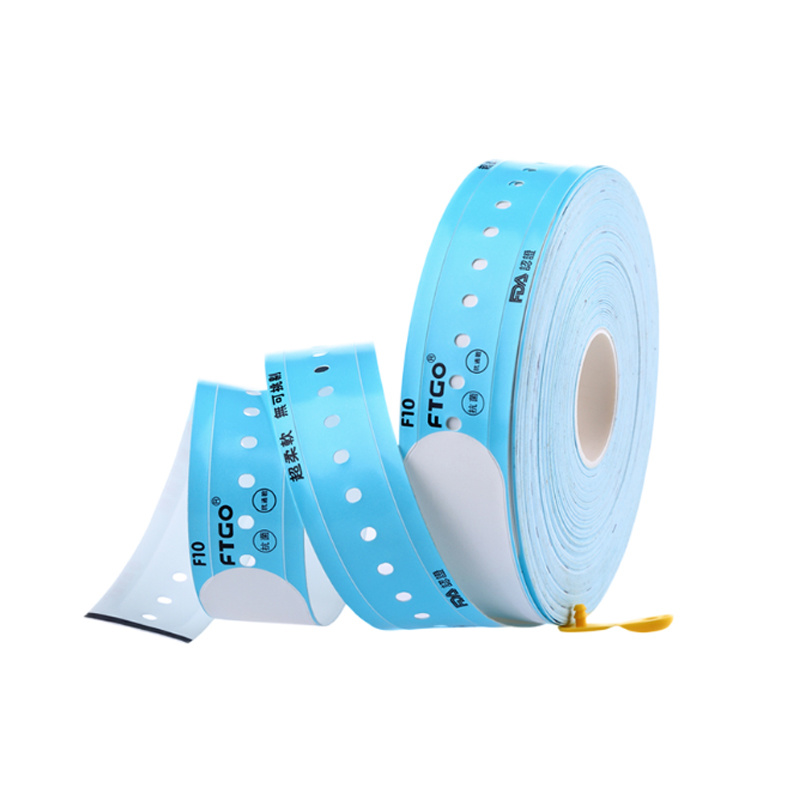
9. FTGO Wristbands: Enhancing Efficiency, Comfort, and Patient Experience
FTGO wristbands offer a comprehensive solution, addressing key challenges and providing advanced features for modern healthcare settings.
- Key Benefits of FTGO Wristbands:
- Customizable options to meet specific facility needs.
- Durable, hypoallergenic materials for maximum patient comfort.
- Advanced technology integration, including barcode and RFID compatibility.
FTGO Wristband Feature Comparison
| Feature | FTGO Wristbands | PDC Wristbands |
| Customization Options | Extensive | Limited |
| Material Comfort | Hypoallergenic | Standard |
| RFID & Barcode Ready | Yes | Yes |
| Durability | High | Medium |
Learn more about FTGO Wristbands and transform patient care in your facility.
Conclusion
Patient wristbands have become essential tools in modern healthcare, enhancing safety, improving workflows, and elevating patient experiences. With ongoing advancements in technology, these wristbands are poised to play an even more critical role in shaping a connected, patient-centered future for healthcare.


previous page
Related News
Contact Us

CONTACT US
Tel:+852 5442 7314
Email:info@ftgo.com
Address:Unit 9040, 903-904, 9/F, Block B, Chung Mei Centre,15-17 Hing Yip Street, Kwun Tong, Kowloon, Hong Kong
Related website: Wristband manufacturer